Steadily develop Hong Kong's compliant stablecoin ecosystem
HKMA Issues First Stablecoin Licenses, Marking New Phase in Regulatory Regime
On April 10, the Hong Kong Monetary Authority (HKMA) announced that the Monetary Authority has, under the Stablecoins Ordinance, granted stablecoin issuer licenses to two institutions – Dingdian Financial Technology Company (a joint venture formed by Standard Chartered Bank (Hong Kong), Hong Kong Telecom (HKT), and Animoca Group, hereinafter referred to as "Dingdian") and HSBC – marking a new phase in the implementation of Hong Kong's stablecoin regulatory regime.
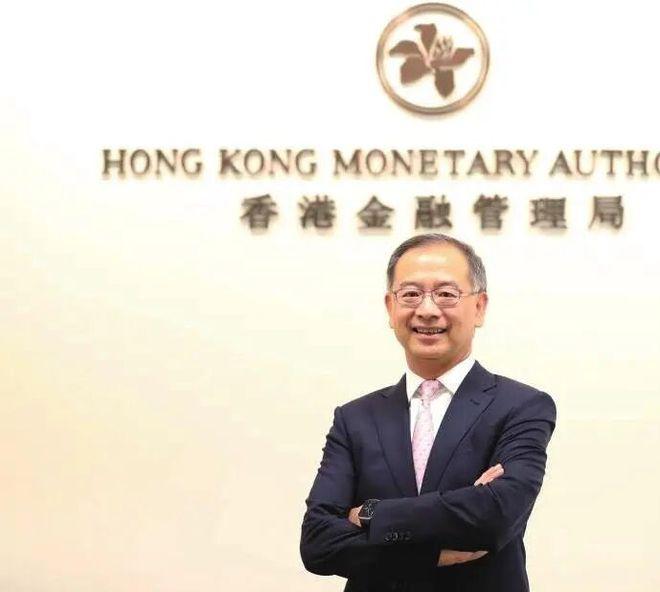
Eddie Yue, Chief Executive of the Hong Kong Monetary Authority. Photo by Xinhua News Agency
Looking back at the development of Hong Kong's stablecoin regulatory framework – from legislative consultation, drafting, and enactment to the implementation of the licensing regime and the issuance of licenses – we have adhered to the risk-based principle of "same activities, same risks, same regulation." Drawing on international regulatory standards as a blueprint, we have established a regulatory regime that is both robust and flexible. This regime safeguards against risks to financial stability, money laundering, and investor protection, while retaining room to adjust regulatory requirements in a timely and appropriate manner during implementation in response to evolving international regulatory trends and market changes. The goal is to enable compliant stablecoins to play a positive role in various application scenarios, effectively addressing pain points in the real economy and financial activities.
License Approval Process
As of the first-phase application deadline on September 30, 2025, the HKMA had received applications from 36 institutions. Faced with a large number of applications, the HKMA's supervisory team has worked diligently over the past six months, conducting comprehensive and in-depth reviews of each application in accordance with the specific requirements set out in the ordinance. The team maintained communication with applicants as needed to clarify questions and request information, ensuring a rigorous and fair approval process.
The HKMA has always emphasized that the licensing threshold is quite high. The assessment primarily considers two aspects: (1) whether the applicant possesses adequate risk management capabilities and experience, and complies with relevant regulations in Hong Kong and other jurisdictions; and (2) whether the applicant can propose specific application scenarios as well as feasible business plans and development strategies. Among the 36 applications, Dingdian and HSBC not only met the statutory licensing requirements but also demonstrated their ability to prudently manage risks and presented concrete application scenarios and future development plans. Hence, they were granted licenses.
Application Scenarios and Development Directions
Both licensed issuers plan to first issue Hong Kong dollar stablecoins. Their business plans, application scenarios, and development directions include the following:
Cross-border payments: Leveraging the advantages of stablecoins and utilizing the issuers' extensive international business networks and partnerships, they aim to provide enterprises and individuals with efficient, transparent, and lower-cost cross-border payment solutions, while complying with the rules and requirements established by regulatory authorities in other jurisdictions.
Local payments: Using existing business infrastructure and customer bases to accelerate the adoption of stablecoins in Hong Kong, offering individuals and merchants secure, fast, and efficient transaction and settlement experiences.
Tokenized asset trading: As a settlement tool for tokenized asset trading, compliant stablecoins can facilitate real-time on-chain transactions, helping to seize opportunities in the tokenized asset market and enhance market liquidity. They will also explore application scenarios such as using compliant stablecoins for collateral management.
Innovative applications: Fully leveraging the programmable features of stablecoins to explore innovative applications such as conditional payments and supply chain financing.
Both licensed issuers have banking backgrounds and have participated in HKMA pilot projects on central bank digital currency (CBDC) and tokenized deposits. This gives them a deeper understanding of the functions and application scenarios of various digital currencies, which is conducive to exploring the possibilities of "future payments." One of the issuers has formed a consortium with local telecommunications, payment, and digital asset companies, enabling compliant stablecoins to generate synergies. Both institutions plan to gradually bring in more partners (e.g., scenario providers) to promote the adoption of compliant stablecoins once their operations are steadily underway. They will also continue to expand stablecoin application scenarios, explore more overseas markets, and consider introducing other currencies based on operational circumstances, market conditions, and international regulatory developments.
Risk Management Measures
Licensed issuers are required to implement robust and prudent policies and risk management measures in areas such as reserve asset management, asset security, price stability mechanisms, redemption arrangements, and technology security, in line with regulatory requirements. They must also establish robust anti-money laundering (AML) systems, including the use of blockchain monitoring tools in daily operations to detect suspicious transactions and take appropriate follow-up actions. They must also verify the identities of stablecoin holders, either independently or through reliable third-party partners, to ensure the effectiveness of monitoring measures. Both licensed issuers demonstrated in their applications that they possess the capabilities to meet and implement these measures.
Next Steps
Before officially launching their compliant stablecoins, licensed issuers must complete preparatory work, including technology platform and system testing, implementation of risk management measures, and allocation of human resources. Based on the current business plans of the two institutions, we expect regulated stablecoins in Hong Kong to be launched gradually from mid- to late this year.
After stablecoins are officially launched in the market, the HKMA will conduct ongoing and effective supervision through on-site examinations, off-site examinations, independent assessments, and meetings with the management of licensed issuers, tailored to the nature of each issuer's business and risks. We will also review the effectiveness of implementation and the status of business expansion preparations against the business plans submitted in their applications, ensuring that the policy objectives of issuing stablecoin licenses in Hong Kong are achieved.
As for institutions that were not granted licenses in the first batch, or other institutions that may apply in the future, the HKMA will maintain communication and exchanges with them and review their applications in accordance with the relevant laws and uniform regulatory standards and requirements. Regarding the issuance of additional licenses and the timing, we maintain an open but cautious attitude, with no clear inclination at this stage. However, we must reiterate that, considering the risks involved in issuance business, user protection, market carrying capacity, and long-term development, the licensing threshold is set quite high. Even if more licenses are issued in the future, the total number of licenses will remain very limited. The operational effectiveness and market response after the two licenses are implemented will also help us make more comprehensive assessments.
Looking Ahead
Many regions around the world are currently formulating regulatory rules for stablecoins. Major international financial organizations such as the Financial Stability Board (FSB) and various regulatory authorities are actively conducting research and discussions on various aspects of stablecoin operations and risk management, including regulatory models for cross-border large-scale stablecoin issuers. The global regulatory direction is expected to become increasingly clear. We will actively participate in these discussions and share Hong Kong's implementation experience. We will also periodically review the design of Hong Kong's regulatory regime in light of international regulatory trends and practical experience, striving to establish a solid foundation for Hong Kong as a digital financial hub and to provide a path for stablecoin regulation that is both innovative and prudent.
Source: Hong Kong Economic Herald
Author: Eddie Yue, Chief Executive of the Hong Kong Monetary Authority